
Preventive Care
Why We're the Top Choice for Preventative Dental Care
When it comes to protecting your smile and your overall health, preventative dental care is key.
Choosing how to straighten your teeth is a bigger decision than it first looks. If you live in Thousand Oaks and you have been weighing braces vs Invisalign, you are probably asking which one works faster, which costs less, and which fits your daily life. Both straighten teeth and correct bite problems, but they do it in different ways, and the best answer depends on your teeth, your age, and your habits. At Smiles4Life, orthodontist Dr. Jeffrey Nagel helps Thousand Oaks families sort through these options every week.
This guide explains how each treatment works, what each one costs, how long each takes, and how to know which fits your smile.
Braces are fixed to your teeth, while Invisalign uses a series of clear, removable trays. That single difference shapes almost everything else about the two treatments.
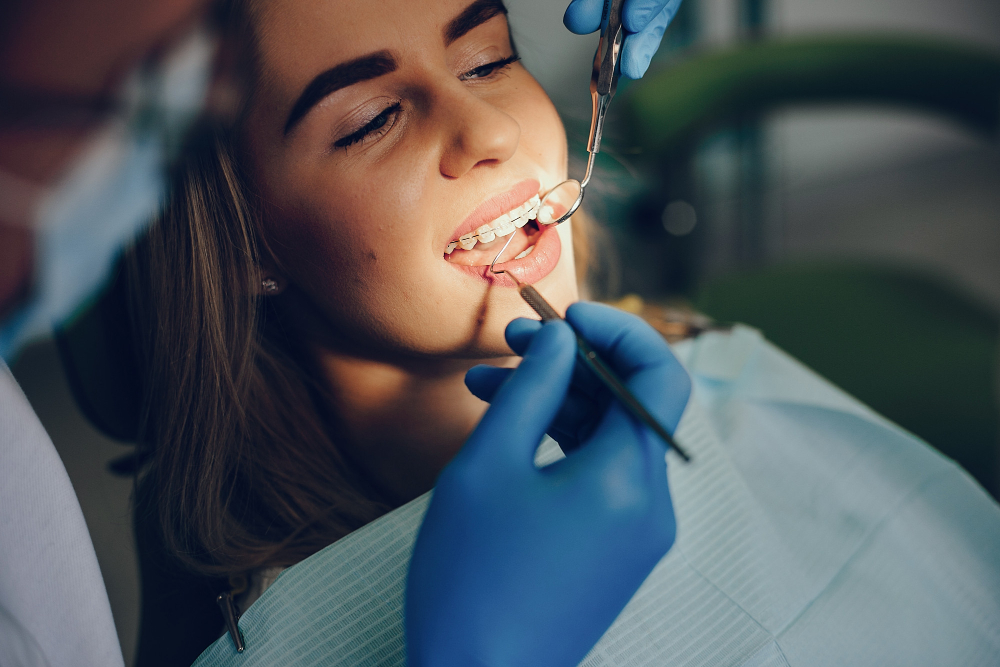
Braces use small brackets bonded to each tooth and connected by a thin wire. Your orthodontist adjusts that wire over time to guide your teeth into the right position. Because braces stay on, they work around the clock with no effort on your part. You also have choices in how they look. Traditional metal brackets are the most familiar option, while tooth colored ceramic braces blend in with your enamel for a more discreet result.
Invisalign uses custom made plastic aligners that fit snugly over your teeth. You wear each tray for one to two weeks, then move to the next one in the series, and the trays gradually shift your teeth into place. They are nearly invisible, and you take them out to eat, brush, and floss. The tradeoff is that they only work while you wear them, which means keeping them in about 20 to 22 hours every day.
If you want to see the clear tray option in detail, the [Invisalign and clear aligners](https://smiles4.life/services/invisalign-clear-aligners) page walks through how treatment works at the practice.
Here is how clear aligners vs braces compare on the factors patients ask about most:
- Visibility: Braces are visible, though ceramic braces blend in more. Invisalign is nearly invisible.
- Removable: Braces stay on for the whole treatment. Invisalign comes out for meals and cleaning.
- Best for: Braces handle the widest range of cases, including severe crowding, rotated teeth, and complex bite problems. Invisalign works best for mild to moderate correction.
- Daily habits: Braces work on their own. Invisalign depends on you wearing the trays consistently.
- Eating and hygiene: Invisalign has no food restrictions and makes brushing and flossing easier. Braces ask you to avoid sticky and hard foods and to clean more carefully around the brackets.
For many patients in Thousand Oaks, the choice comes down to two things: how complex the correction is, and how disciplined you can be about wearing aligners. A teen who plays a wind instrument or an adult in a lot of meetings may lean toward Invisalign for its low profile. Someone with a complicated bite may get a faster, more predictable result with braces. Dr. Jeffrey Nagel reviews both paths at your first visit and recommends the one that will give you the best outcome. You can browse the full [orthodontic dentistry services](https://smiles4.life/services-categories/orthodontic-dentistry) or book a consultation with Smiles4Life to get a recommendation built around your smile.
Neither treatment is always faster, because speed depends mostly on how far your teeth need to move. The size of the correction matters more than the appliance you choose.
For mild to moderate crowding or spacing, braces and Invisalign often finish in a similar amount of time. For complex bite problems or large tooth movements, braces sometimes move teeth more efficiently. Invisalign can also run longer than planned if the trays are not worn enough, since they only work when they are in your mouth. Most orthodontic treatment takes somewhere between 12 and 24 months, though simple cases can wrap up sooner.
Invisalign often costs a little more than traditional braces, though the gap is smaller than many people expect. The final price for either treatment depends on how much your teeth need to move and how long you wear the appliance.
Cost should not stand between you and the smile you want. Smiles4Life accepts most major PPO plans and offers flexible [financing options](https://smiles4.life/financing) through CareCredit, Cherry, and Sunbit, so you can spread payments over time. New patients can also put a $700 off braces gift card toward treatment. Check your coverage and payment choices before your visit so you walk in knowing exactly what to expect.
For most younger children, traditional braces remain the most dependable choice, while many teens do well with either braces or Invisalign. The right pick depends on the child's specific bite and whether they can keep up with wearing aligners.
The American Association of Orthodontists recommends that every child have a first orthodontic checkup by age 7. An early visit lets Dr. Nagel spot jaw and spacing issues while a child is still growing, which can make later treatment shorter and simpler. For younger kids, [early orthodontic treatment](https://smiles4.life/services/early-orthodontic-treatment) can guide jaw development before all the adult teeth arrive. For school age children ready for alignment, [braces for children](https://smiles4.life/services/braces-for-children) gently move teeth into healthy position. You can read more about the age 7 guideline from the [American Association of Orthodontists](https://www.aaoinfo.org).
Smiles4Life welcomes kids, teens, adults, and seniors, so your whole family can be cared for in one Thousand Oaks office.
Getting started is simpler than most people think. Here is how the process works at Smiles4Life:
1. Exam and digital scan. Dr. Jeffrey Nagel examines your teeth and takes a digital scan to create a 3D model of your bite. There is no messy impression material.
2. Treatment plan. He reviews your braces vs Invisalign options and explains which one fits your goals, your timeline, and your budget.
3. Start treatment. You receive your braces or your first set of clear aligners, along with simple instructions for caring for them.
4. Regular visits. You return for short appointments so your treatment stays on track and any adjustments happen on time.
5. Retainer. Once your teeth reach their final position, a custom retainer holds them there so your results last.
Ready to see which option fits you? Book a consultation with Smiles4Life and meet Dr. Nagel to get a clear, personal plan.
Smiles4Life provides orthodontic care, including braces and Invisalign, in Thousand Oaks, CA. What sets the practice apart is that your care happens under one roof with no referrals needed. Many local offices that offer braces are general dentists adding alignment on the side. Dr. Jeffrey Nagel is a true orthodontist who completed his orthodontic residency and a Master's in Oral Biology at UCLA and is certified in clear aligner therapy. A second generation orthodontist and lifelong Conejo Valley resident, he treats every patient like a neighbor.
Because Smiles4Life houses general dentistry, pediatric care, periodontics, and more in the same building, your family can handle cleanings, fillings, and any follow up care without driving across town. That convenience, paired with most PPO plans accepted and flexible financing, makes straightening your smile easier for busy Thousand Oaks families.
If you have spent time comparing braces vs Invisalign and want a straight answer built around your teeth and your life, Smiles4Life in Thousand Oaks is ready to help. Book your orthodontic consultation today and take the first step toward a smile you love.
